What To Plan for If You’re Staying in Your Home Long-Term
- WWH

- May 5
- 2 min read
Aging in place is absolutely possible—but it works best when you plan ahead.
The reality is, a home that fits your lifestyle today may need adjustments over time. Thinking about those changes early can make the process smoother, more affordable, and far less stressful down the road.
Some updates are simple and relatively low-cost—like installing grab bars in the bathroom, improving lighting, or adding non-slip flooring. Others can be more involved, such as widening doorways, modifying bathrooms, or even reconfiguring your layout to bring essential living spaces onto the first floor.
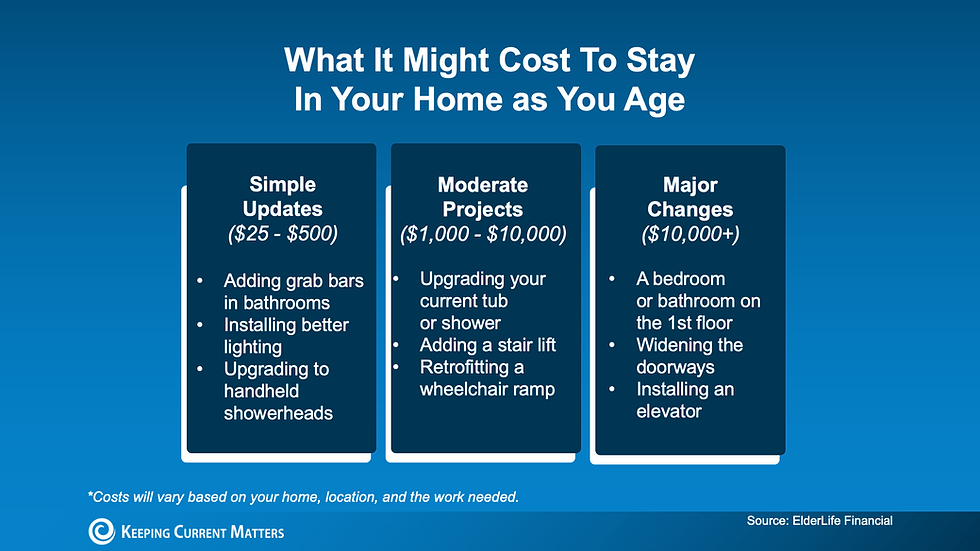
There’s a wide range in both scope and cost. That’s exactly why planning matters. Not because you need to tackle everything now, but because giving yourself time opens up more flexibility and better decision-making.
Planning ahead gives you:
Time to evaluate what changes your home may need
Time to research design options and solutions
Time to find the right contractors for the job
Time to spread out expenses instead of facing one large cost
According to ElderLife Financial, the cost of aging-in-place modifications can vary widely depending on the level of work required—from minor safety upgrades to more extensive renovations.
And if cost is a concern, you’re not without options. There are financial assistance programs that may help cover certain improvements, and tools like home warranties can offer peace of mind when it comes to unexpected repairs.
If you’re considering updates, it’s also smart to have a quick conversation with a real estate professional before you begin. They can help you understand which improvements make the most sense for your situation—and how those changes may impact your home’s value in your local market.
Staying in your home long-term is doable. A little planning today can make a big difference in how comfortable—and financially manageable—it is tomorrow.


Comments