How Home Equity Can Help Fund Your Move to a 55+ Community

Renovating a longtime home can sound simple at first. Then the project list grows: fewer stairs, safer bathrooms, wider doorways, easier yard care, better lighting, and a layout that works well for the years ahead. For many homeowners, the cost, disruption, and decision fatigue can make remodeling feel like more than they want to take on.
That is where home equity can change the conversation.
Home equity is the difference between what your home is worth today and what you still owe on your mortgage. If you have owned your home for many years, paid down your loan, and benefited from rising home values, that equity may be one of your most useful financial resources. Selling your home could give you the funds to buy a place that better fits your lifestyle now, including a home in a 55+ community.
This article is for general informational purposes only and is not financial, tax, or legal advice. A real estate agent, lender, tax professional, or financial advisor can help you understand your specific situation.
What home equity really means when you are planning a move
Home equity is often talked about like a number on paper, but it becomes practical when you sell.
Here is a simple example. If your home could sell for $450,000 and you owe $150,000 on your mortgage, your gross equity is $300,000. From there, selling costs, closing costs, moving expenses, and any remaining liens or fees would need to be factored in. The amount left after those costs may be available to help with your next purchase.
That money could be used in several ways:
Making a larger down payment on your next home
Buying a lower-maintenance property with less monthly strain
Reducing or avoiding a mortgage, depending on your price range and finances
Covering moving costs, repairs, furniture, or transition expenses
Keeping extra cash available for future needs
The key is to look beyond the sale price alone. A home may have appreciated, but the real question is how much you can reasonably net after expenses.
A local real estate agent can prepare a market estimate based on recent nearby sales, your home’s condition, and buyer demand in your area. That estimate is not a guarantee, but it gives you a starting point for deciding whether a move is realistic.
Why a 55+ community may be easier than renovating
Many people start by asking, “Can I make my current home work?” Sometimes the answer is yes. A few updates may be enough. Other times, the home itself is the problem.
A two-story layout may become less practical. A large yard may take more time and energy than it once did. Older bathrooms, narrow halls, steep driveways, and isolated locations can all make daily life harder over time.
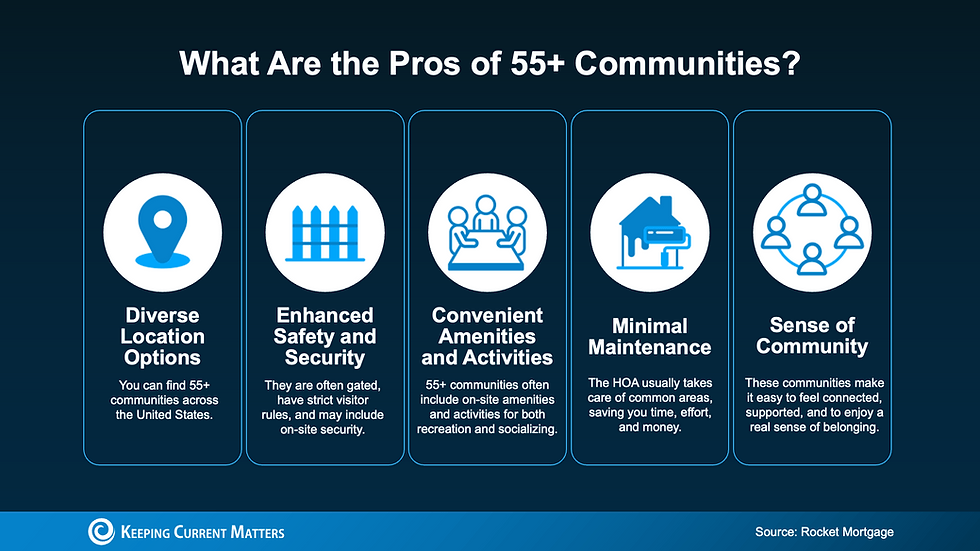
A 55+ community may solve some of those issues from the start. These communities often include homes and amenities designed with older homeowners in mind. While every community is different, common features may include:
Single-level living or first-floor primary suites
Lower-maintenance exteriors
Walking paths, fitness areas, pools, or clubhouses
Social events and interest groups
Lawn care or exterior maintenance through an association
A neighborhood of residents in a similar stage of life
The appeal is not only the home itself. It is also the lifestyle around it. Instead of managing a major renovation, you may be able to move into a place already built for comfort, access, and connection.
That can free up time for the things that often matter most: hobbies, travel, family, volunteering, staying active, or simply enjoying a home that feels easier to manage.
Compare the true cost of staying versus moving
Before making a decision, it helps to compare both paths side by side. The best choice is not always the one with the lowest upfront cost. It is the one that supports your finances, comfort, and long-term plans.
Renovating might make sense if you love your neighborhood, have strong local support, and only need modest updates. Moving may make more sense if the home needs major changes or if the upkeep has become a burden.
Here are a few costs to review.
Staying and renovating
Bathroom or kitchen modifications
Stair lifts, ramps, or entry changes
Roof, HVAC, or major home repairs
Ongoing yard and exterior upkeep
Time living through construction
Moving to a 55+ community
Real estate commissions and closing costs
Moving and packing expenses
Homeowners association fees, if applicable
Possible downsizing or storage costs
Time adjusting to a new neighborhood
Monthly costs matter too. A 55+ community may have an HOA fee, but that fee may cover services you currently pay for separately, such as lawn care, snow removal in some regions, exterior maintenance, or amenities. On the other hand, some communities have rules, fees, or restrictions that may not fit your preferences.
Ask for a full breakdown before you decide. Review the purchase price, HOA dues, what those dues include, property taxes, insurance, utilities, maintenance, and any community fees.
How to estimate how much equity you may have
You do not need to know the exact number right away, but you do need a reliable estimate. Online home value tools can be a rough starting point, but they cannot fully account for your home’s condition, upgrades, lot, layout, or local buyer trends.
A better estimate usually comes from a local real estate professional who can compare your home with recent sales in your area. This is often called a comparative market analysis.
To get a clearer picture, gather:
Your current mortgage balance
Information about any second mortgage or home equity loan
Recent updates or repairs you have made
An estimate of selling costs
An idea of your desired next-home budget
Once you have those pieces, you can begin mapping out how much buying power your current home may give you. This can help you decide whether to sell before buying, buy before selling, or time both transactions carefully.
What to look for in a 55+ community
Not all 55+ communities are alike. Some feel quiet and residential. Others offer a full calendar of clubs, classes, and events. Some have detached homes, while others include condos, townhomes, or villas.
When touring communities, look beyond the model home. Pay attention to daily life.
Consider these questions:
Does the floor plan work well for today and later?
Are the entrances, bathrooms, laundry areas, and storage easy to use?
What maintenance does the HOA handle?
What rules apply to guests, pets, rentals, parking, and exterior changes?
Are the amenities ones you will actually use?
How close is the community to doctors, grocery stores, family, airports, or places you visit often?
Does the neighborhood feel welcoming and comfortable?
It can also help to visit at different times of day. A weekday morning may feel different from a weekend afternoon. If possible, talk with residents about what they like and what they wish they had known before moving in.
A real estate agent can help connect the numbers to the next step
The decision to stay or move is personal. It involves money, comfort, memories, family, and lifestyle. A good agent does more than suggest a list price. They can help you understand your home’s current market value, estimate your available equity, and compare it with homes in 55+ communities that fit your goals.
They can also help you think through timing. For example, selling first may give you a clear budget, but you may need temporary housing. Buying first may be more convenient, but it may require stronger financing or a plan for carrying two homes for a short period. The right path depends on your finances and local market conditions.
If remodeling feels overwhelming, selling your current home may give you another way forward. Your equity could help turn years of ownership into a home that is easier to enjoy now and better suited for the future.
The next step is simple: find out what your home may be worth, then explore what that equity could make possible.


Comments